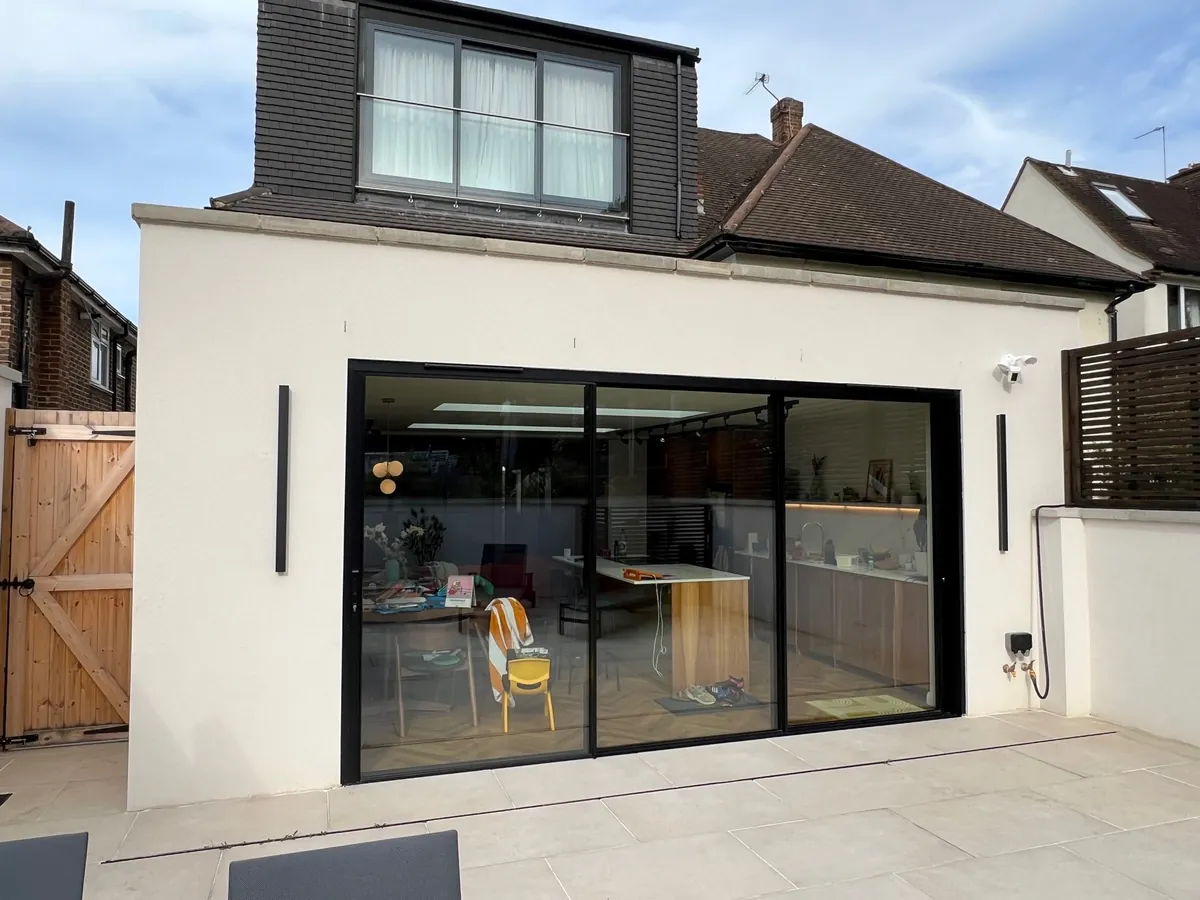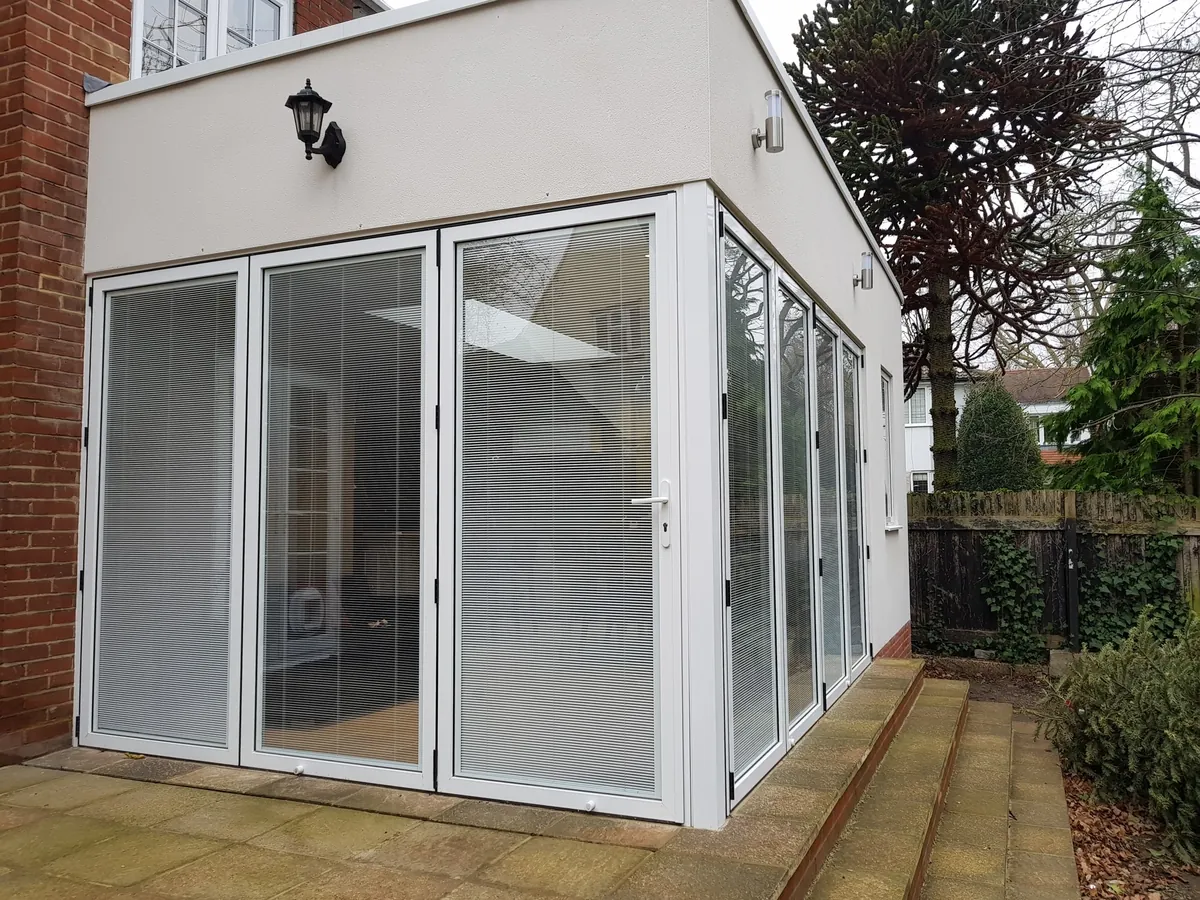

Large sliding doors, roof lanterns and glazed roofs are wonderful until a sunny afternoon in July. Solar control glass such as Saint-Gobain's COOL-LITE SKN II is designed to stop that overheating.
What it does
SKN II has a thin coating that lets most daylight through but reflects a large share of the sun's heat. In a typical double-glazed unit, SKN 176 II lets through about 70% of visible light but has a g-value of 0.37, meaning only around 37% of solar heat gets in.
Does it look tinted?
Older solar glass often looked blue, green or mirrored. SKN II is designed to look neutral, with about 13% external reflection.
It helps in winter too
With argon fill, an SKN 176 II unit reaches a centre-pane U-value of 1.0 W/m²K, so it keeps heat in as well as out.
When it's worth it
- South or west-facing sliding doors and glazed walls.
- Glazed roofs, lanterns and rooflights, where the sun hits glass directly.
- New builds, where overheating is now part of the building regulations in England (Approved Document O).
- Rooms used in the afternoon, like kitchens and living spaces.
When it might not be
North-facing windows and small openings rarely overheat. There, the extra cost brings little benefit and you'd lose a little daylight.
Our verdict
For big glass facing the sun, yes, it's one of the best upgrades you can make. We'll look at orientation and glazing area on survey and tell you honestly whether it's needed.