

Protection against injury
If the glass breaks, the fragments stay bonded to the interlayer. Often required in schools and nurseries, and just as useful at home with children and pets around low glazing and doors.

Home / Glass & blinds / Security laminated glass
Saint-Gobain SGG STADIP® & STADIP® PROTECT · laminated safety and security glassTwo or more sheets of glass bonded to a tough PVB interlayer. If it's hit, the pieces stay stuck in place and the pane stays in the frame, protecting your family and keeping intruders out.
Renovating or extending is a chance to create bright, open spaces, and the glass in them should be as safe as it is beautiful. SGG STADIP® from Saint-Gobain is laminated glass: if it breaks, the PVB interlayer holds the fragments together, and in a fully framed installation the pane keeps its strength until it's replaced.
STADIP PROTECT adds security grades tested to BS EN 356, and it all combines with the other glass we fit, from solar control to low-iron.

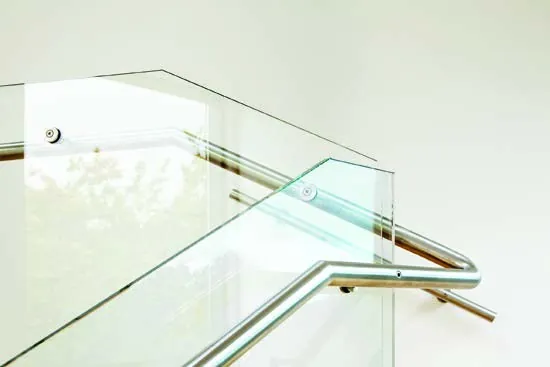
A plastic interlayer of polyvinyl butyral (PVB) is placed between sheets of glass, then the assembly is put under heat and pressure until the vinyl and glass are fully bonded into one clear pane.
More sheets and thicker interlayers raise the protection level, from everyday safety glass up to STADIP PROTECT security grades. An acoustic PVB turns it into STADIP SILENCE.
The same knock, three very different results. Choose a glass type to see how it fails, using the BS EN 12600 impact classes.
If the glass breaks, the fragments stay bonded to the interlayer. Often required in schools and nurseries, and just as useful at home with children and pets around low glazing and doors.

Overhead glass must meet safety, thermal and solar rules. Laminated glass stops objects falling through and reduces the risk of fragments falling. STADIP PROTECT meets the requirements for overhead glazing.
Laminated safety glass keeps residual stability after breakage and can retain the object that broke it, when properly sized, supported and installed to BS EN 12600. Used for guarding, partitions and sloping glazing.

STADIP PROTECT security glass slows or stops break-ins, rated to BS EN 356. The grade is chosen by risk assessment: property type, access, location and your insurer's requirements.
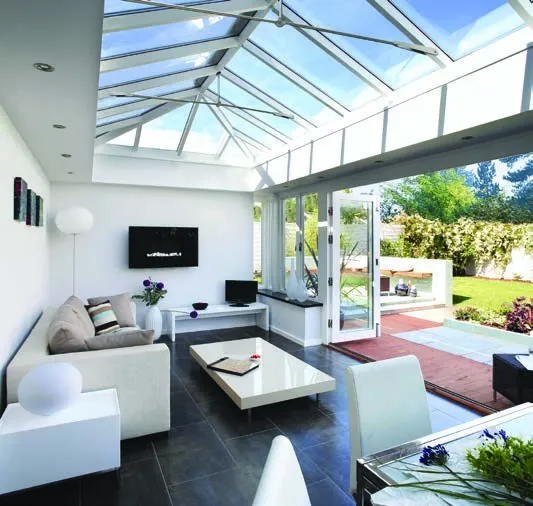
The PVB interlayer filters most UV rays, which reduces fading of floors, curtains, carpets and furniture in conservatories and sunny extensions.
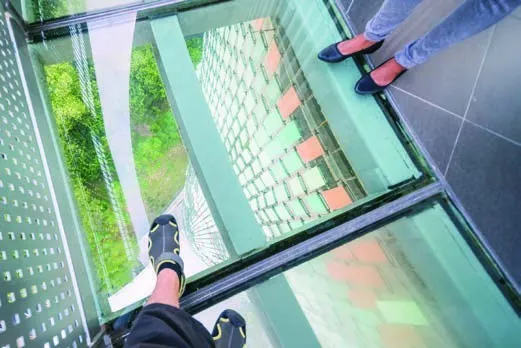
SGG LITE-FLOOR is a laminated safety glass specially designed and sized for walk-on floor panels.
Security glass is graded by attack testing. Classes P1A to P5A drop a 4.1kg steel ball on the same spot from higher and higher. P6B to P8B use a mechanical axe. Tap a class to see what it means.
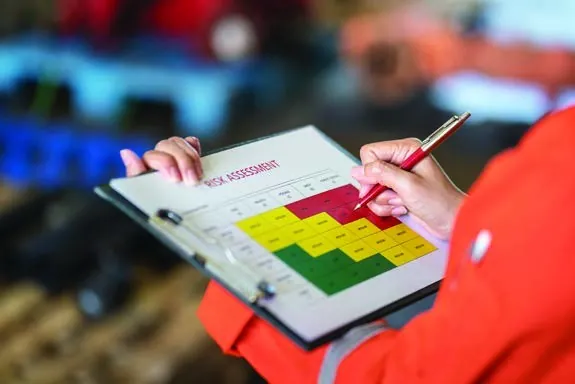
Picking STADIP PROTECT or a higher SP grade is a case-by-case decision. We look at the type of property, how easy the glazing is to reach, the location (an isolated house or a high-risk area) and any insurance requirements.

Laminated glass already damps sound better than a single sheet. STADIP SILENCE uses an acoustic interlayer for homes near airports, town centres, railways and motorways. Higher Rw means a quieter room.
Saint-Gobain sound reduction (Rw, dB) for double-glazed units. SS = STADIP SILENCE acoustic laminate, middle figure is the cavity in mm. An 8.8mm STADIP SILENCE pane with COOL-LITE SKN 176 also achieves P2A security and 1(B)1 safety. Real results also depend on the frame, seals and installation.
Laminate the outer pane of a COOL-LITE SKN unit for security and less solar heat.
Pair with a low-E inner pane for warm, secure double or triple glazing.
Ultra-clear glass for frameless balustrades and floors where green edges would show.
Body-tinted glass for glare control and a coloured look.
Bright extensions, glass roofs, balustrades and floors. Tap any photo to enlarge.
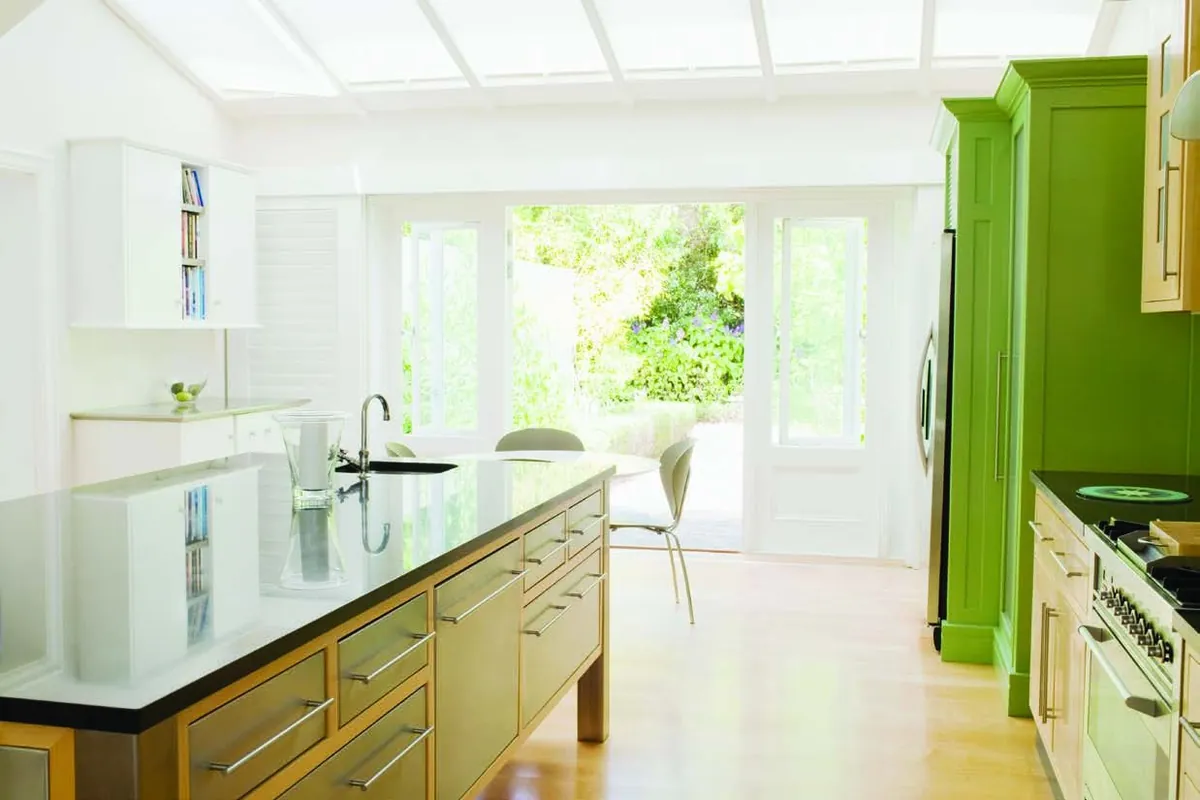

Figures are Saint-Gobain data. The right laminate depends on the glass size, where it's fitted and the standard needed, including Secured by Design, overhead glazing and insurance requirements. We'll confirm the build-up for each opening.
| Construction | Two or more glass sheets bonded with a PVB interlayer under heat and pressure |
|---|---|
| Range | SGG STADIP® (safety) · STADIP® PROTECT and PROTECT SP (security) · STADIP® SILENCE (acoustic) · LITE-FLOOR (floors) |
| Breakage | Fragments stay bonded to the interlayer; pane stays in a fully framed opening until replaced |
| Impact safety | BS EN 12600, mode B (laminated) · up to class 1(B)1 |
| Security | BS EN 356 classes P1A–P8B, chosen by risk assessment · P2A typical for doors and accessible glazing |
| Overhead glazing | STADIP PROTECT meets requirements for roofs and overhead glazing |
| UV | PVB interlayer filters most UV rays |
| Acoustic | Rw 33 dB (6/16/6) to Rw 51 dB (10.8A/24/14.8SS) with STADIP SILENCE |
| Temperature | Mechanically stable 10°C to 45°C inside the assembly |
| Combine with | COOL-LITE® · PLANITHERM® · DIAMANT® · PARSOL® |
Saint-Gobain data. The right build-up depends on size, location and the standard required.
Both are safety glass. Toughened glass shatters into small blunt pieces, so the whole pane falls out. Laminated glass cracks but stays stuck to its interlayer and stays in the frame, so the opening stays closed and harder to get through.
No. It can be cracked, but it's designed to hold together and resist being broken through. Higher BS EN 356 grades take more blows before anyone can get through.
Secured by Design and PAS 24 doorsets often call for laminated glass rated to BS EN 356 in doors and glass beside doors. We'll check the requirement for your project and your insurer's terms.
Yes. Laminated glass is usually fitted as one pane of the sealed unit, typically the outer pane for security or the inner pane for safety, and it combines with low-E, solar control and acoustic glass.
No. Standard STADIP is clear and looks just like normal glass. It's only slightly heavier and thicker.
The PVB interlayer filters most UV rays, which helps reduce fading of floors, fabrics and furniture. It won't stop fading completely, as visible light also plays a part.
Yes. All laminated glass helps a little, and STADIP SILENCE, with an acoustic interlayer, is designed for homes near main roads, railways and flight paths.

Saint-Gobain STADIP SILENCE: clear laminated glass with a sound-damping interlayer, up to Rw 51 dB in a double-glazed unit.
View details
Saint-Gobain's double-silver solar control glass: up to 75% daylight in, a fraction of the sun's heat, neutral look.
View details
Uni-Blinds® Venetian and pleated blinds sealed inside the glass: manual, solar-powered or motorised.
View detailsTell us where the glass is going and we'll recommend the right laminate, from safety to security grade.